• The Gem Keeper

    The Gem Keeper: The Illusia Chronicles

    Murphy Tulley knows he’s no hero. However, when someone steals the magical Gem of Nashel from his mining town, they lose its protection, which leads to illness and potential death for everyone in Airinton. While still grieving the loss of his father, the town’s last Gem Keeper, it’s up to Murphy to retrieve the missing gem.

    He sets off alone to find it, guided only by a mysterious internal connection. When an unlikely group of friends and creatures join him, they learn to work together in a race against time.

    As Murphy pushes past his own doubts and fears, he realizes heroes come in all shapes and sizes. Can he summon the courage to save the day?

    For Readers 8-14 from author Diane Martin.

    Comments Off on The Gem Keeper: The Illusia Chronicles
  • Exploring the Delightful World of Cat’s Cradle!

    Hello, young string enthusiasts and playful adventurers!

    Are you ready to unravel the secrets of an ancient game that will have your fingers dancing with delight? Today we’ll dive into the captivating world of Cat’s Cradle, a string game that people around the globe have enjoyed for centuries. Cat’s Cradle is more than just a game—it’s a creative and imaginative journey that will test your dexterity, challenge your mind, and bring endless joy. With nothing more than a simple string, you’ll learn the intricate patterns, discover exciting variations, and unlock the key to transforming a piece of thread into a world of shapes and stories. So, gather your strings, flex your fingers, and let’s embark on a string-tastic adventure into the mesmerizing world of Cat’s Cradle!

    Want something fun to do with friends or by yourself to pass the time? Well, we’ve got the perfect game for you! Cat’s Cradle is a traditional string game that is played with 2 or more people and involves making a series of shapes.

    Why is the game of cat’s cradle called that?

    It is thought to be a corruption of cratch-cradle, or the manger cradle in which baby Jesus was laid (cratch standing for creche, French for “rack” or “manger”), but this is only conjecture by linguists.

    Creating these string figures is a piece of cake once you get the hang of it, and all you need to get started is a piece of string, a steady hand, and a bit of patience.

    Make a circle with a piece of string that’s 40 inches long. Any type of string or cord will work to play Cat’s Cradle as long as it fits around your hands, but 40 inches is the perfect length. Tie the 2 ends of the string together to form a large ring or circle.

    Choose a player to start the game. Traditionally, Cat’s Cradle is played with at least 2 people. The person who starts the game will start with the string in their hands. After each shape, the string will be passed from person to person so everyone will get a turn.

    • Keep in mind that there’s generally no “winner” with this game—the goal is to see how far you and your friend(s) can go without making a mistake.
    • You can play Cat’s Cradle with as many people as you want, moving the string from one person to the next after each cycle.
    • Try picking a partner whose hands are roughly the size of your own to make the game a little easier.

     Loop the string around the back of both hands. Thread your hands into the string, and tug them away from each other, so the string becomes taught. Let the string rest just behind your knuckles. Point your thumbs up and keep them outside of the string. This way, the string won’t slip out of your hands.

    • Some players prefer to lace the string around their middle and ring finger to start the game, but that could make it a bit harder for beginners.

    Wrap the string around your wrists. Rotate your hands so that the loop doubles up around your palms. Now you should have 2 strands of string running parallel to each other from either side of your palms, forming a rectangle.

    • Turn your wrists so that only 1 strand gets wrapped around twice. Otherwise, both strands will twist together and you won’t have the same setup.
    • If you’re having trouble looping the string around your wrists a second time, have another player help you.

    Catch the inner strand of the string with your middle fingers. Reach across and slide a middle finger under the strand looped in front of your finger’s opposite palm. Repeat with your opposite hand, only grabbing the section in front. Then, pull the strands apart to form a double “X” in the middle. You’ve just formed “Cat’s Cradle!”

    To keep the game going, have the next player form a new shape.


                                                                                                             AIME

    Comments Off on Exploring the Delightful World of Cat’s Cradle!
  • Restart

    Restart

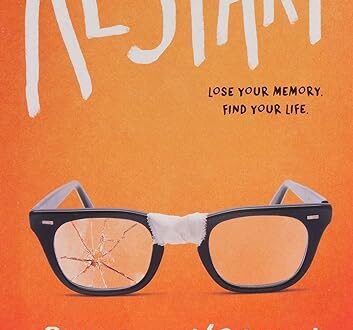
    The amazing story is about what you can do when life gives you a second chance.

    Chase’s memory just went out the window. Chase doesn’t remember falling off the roof. He doesn’t remember hitting his head. He doesn’t, in fact, remember anything. He wakes up in a hospital room and suddenly has to learn his whole life all over again . . . starting with his own name. He knows he’s Chase. But who is Chase? When he gets back to school, he sees that different kids have very different reactions to his return. Some kids treat him like a hero. Some kids are clearly afraid of him. One girl in particular is so angry with him that she pours her frozen yogurt on his head the first chance she gets. Pretty soon, it’s not only a question of who Chase is–it’s a question of who he was . . . and who he’s going to be. Restart is the spectacular story of a kid with a messy past who has to figure out what it means to get a clean start.

    For Readers 10-12 from the New York Times and #1 bestselling author of Swindle and Slacker, author Gordon Korman.

  • Cracking the Code—Unlocking the World of Secret Messages!

    Greetings, young codebreakers, and secret agents in the making! Are you ready to embark on an exhilarating journey where words become puzzles and messages become mysteries? Today we’ll explore writing secret codes. Writing secret codes is not just a game—it’s a way to communicate in a language known only to you and your trusted allies. Whether you’re passing notes in class, sending secret messages to friends, or simply exploring the art of cryptography, unveiling ancient ciphers, will empower you to become a master of secret communication. So, grab your pencils, don your detective hats, and let’s unravel the secrets of the clandestine world of writing secret codes!

    Cryptography is the use of codes and ciphers to keep information secret. Records show that cryptography has been used for thousands of years.

    Historically, cryptography methods primarily involved the use of pen and paper encryption or simple mechanical aids. For example, clay tablets found in Mesopotamia dating from 1500 BC had an encrypted recipe for pottery glaze. And Hebrew scholars were using substitution ciphers as far back as 500 or 600 BC.

    In modern times, the ability to send encrypted messages has been of vital importance during war efforts. For example, the US recruited and trained Navajo “code talkers” during World War II. These code talkers developed a code in their native Navajo language, aiding the US in its war effort against the axis forces by enabling secret messages to be transmitted.

    Codes vs. Ciphers

    Cryptography uses both codes and ciphers. But what is the difference?

    Codes are based on semantics, or the meaning of language. An example of code used by the Navajo code talkers for the word “plane” is “wo-tah-de-ne-ih.” In contrast to codes, ciphers are based on syntax, or symbols. Ciphers are typically just a set of instructions (an algorithm) for converting one set of symbols (e.g., letters) into another set of symbols (e.g., numbers or pictographs). An example of a simple letter-to-number cipher is A=1, B=2, C=3, etc.

    All that being said, while codes and ciphers are different, the terms are often used interchangeably. Morse code, for example, it technically a cipher, not a code. Nonetheless, it is called Morse code, not Morse cipher.

    Morse Code—converts letters and numbers into a series of dots and dashes (sometimes called dits and dahs). In Morse code, each dash has a duration that is three times as long as each dot. Each dot or dash within a character is followed by a period of no signal, called a space, equal in duration to the dot.

    Morse code is well suited to be communicated through sound using audio tones. It can also be communicated visually using flashing lights. Although the code is not designed to be transmitted in written format, it can be written as well.

    The Caesar Shift Cipher—is named after Julius Caesar, as he used this cipher to encrypt messages. However, it isn’t a very difficult cipher to figure out and thus messages sent with this cipher did not stay secret for very long.

    With the Caesar Shift cipher, each letter of the alphabet is “shifted” some fixed number. The shift is named a “ROT,” which stands for “rotation.” For example, with a ROT1 shift A becomes B, B becomes C, and so on. With a ROT13 shift, on the other hand, A becomes N, B becomes O, C becomes P, etc. To decode a message sent using the Caesar Shift cipher, the person must be aware what shift has been used.

    Codes and ciphers can be fun. There are a lot of “codebreakers” and “cipher-makers” out there on the Internet for you to use and have fun with. Go find them and have fun sending your secret messages!

    AIME

    Comments Off on Cracking the Code—Unlocking the World of Secret Messages!
  • Post

    Posted

    In middle school, words aren’t just words. They can be weapons. They can be gifts. The right words can win you friends or make you enemies. They can come back to haunt you. Sometimes they can change things forever.

    When Branton Middle School bans cell phones, Frost and his friends Deedee, Wolf, and Bench devise a new way to communicate. They leave sticky notes for each other all around the school. It catches on, and soon all the kids in school are leaving notes—though for every kind and friendly one, there is a cutting and cruel one as well.

    In the middle of this, a new girl named Rose arrives at school and sits at Frost’s lunch table. Rose is not like anyone else at Branton Middle School, and it’s clear that the close circle of friends Frost has made for himself won’t easily hold another. As the sticky-note war escalates, and the pressure to choose sides mounts, Frost soon realizes that after this year, nothing will ever be the same.

    For Readers 10-12 from author John David Anderson.
  • Archeological Mysteries You Just Might Want to Explore

    Welcome mystery lovers and antiquity detectives! Today we are going to be introduced to several ancient mysteries that have recently been solved—or have they?

    A discovery two millennia in the making

    For over 150 years experts have puzzled over a set of strange half-circles, found in France, and dated to the country’s Stone Age. Craftsmen crafted the first example of the ‘open rings’ from deer antlers, which was found in Le Placard Cave in southwestern France in the 1870s. Since then, researchers have uncovered 11 more. One of these was a so-called ‘preform’—a half-finished ring still attached to the antler—which was dated by researchers and found to be an enormous 21,000 years old.

    Now a new study claims to have finally explained the rings’ unusual shape: they were finger grips for Paleolithic spear-throwers. A spear-thrower is a wooden shaft attached to a dart that was used for hunting large game, and the finger loop would have given the wielder extra grip and accuracy.

    L’Anse aux Meadows, Newfoundland and Labrador, Canada

    A discovery by a Norwegian couple in 1960 shattered the idea that Christopher Columbus was the first European to reach the Americas. L’Anse aux Meadows investigations confirm Vikings crossed the Atlantic 500 years before Columbus. Once they’d landed in America, a small community of Vikings set up camp in sturdy wooden huts—though it’s unclear whether the site functioned as a trading base or a colony. Nowadays, recreated buildings help modern visitors picture what life was like when the Vikings came to North America.

    Hoxne hand axes, England, UK

    When antiquarian John Frere found flint hand axes in a 12-foot hole dug by brick workers in Suffolk in 1797, he wrote to the Society of Antiquaries and ventured his belief that these axes were from a “very remote period indeed”—a controversial assertion when many still followed the Bible’s suggestion that the world was only a few thousand years old. But Frere wasn’t wrong, and modern tests proved that the hand axes date back at least 370,000 years. The flint tools are now housed in the British Museum.

    Giza workers’ cemetery, Egypt

    Traditional Egyptology has long held that slaves working in back-breaking conditions built the pyramids—a view propagated by the classical Greek historian, Herodotus. But an ancient cemetery uncovered at the turn of the 21st century suggests laborers able to quit at will actually built the pyramids. Those who died on the job had a respectful burial close to the tombs they built, which included jars of beer and bread for the afterlife. Not quite the riches of pharaonic burials, but these generous gifts have changed our understanding of social class in the deserts of ancient Egypt.

    Gobekli Tepe, Turkey

    For a long time, historians thought the Neolithic Revolution—when humans stopped being nomads and started living in permanent agricultural settlements—occurred around 10,000 years ago. That consensus lasted until the 1990s, when archaeologists working at Gobekli Tepe in southern Turkey used radiocarbon dating to pinpoint the site’s construction to 11,000 years ago, pushing the birth of human settlement further back into prehistory. Not only that, but some archaeologists working at Gobekli Tepe believe it may have been home to the world’s first temple. It’s well worth a trip to Turkey to see a monument twice the age of Stonehenge.

    Now if you love solving mysteries, and you like adventures, who knows? Maybe someday you will become an archeologist and set out to explore the world and its ancient mysteries for yourself.

    AIME

    Comments Off on Archeological Mysteries You Just Might Want to Explore
  • Eleven

    Eleven

    Alex Douglas always wanted to be a hero. But nothing heroic ever happened to Alex. Nothing, that is, until his eleventh birthday. When Alex rescues a stray dog as a birthday gift to himself, he doesn’t think his life can get much better. Radar, his new dog, pretty much feels the same way. But this day has bigger things in store for both of them. This is a story about bullies and heroes. About tragedy and hope. About enemies with two legs and friends with four, and pesky little sisters and cranky old men, and an unexpected lesson in kindness delivered with a slice of pizza. This is Eleven: the journey of a boy turning eleven on 9/11.

    For Readers 10-12 from author Tom Rogers.

  • The Mystery of Supergiant Stars

    Hello star lovers and adventure-seekers! Today we are going to look at supergiant stars, galaxies, and star clusters.

    Supergiant stars are among the most massive and most luminous stars in the universe. Super giant stars can have masses from 10 to 70 times greater than our Sun, and when it comes to brightness, some of them can be from 30,000 times or brighter than our Sun. In regard to their radius, super giants vary greatly, from 30 to 500, or even exceeding 1,000 solar radii. This means that some super giants are so large that they could engulf the orbit of Jupiter or even Saturn if placed at the center of our solar system.

    Supergiant stars are classified by their temperature and color. The hottest and bluest super giants are of spectral type O. Super giants are also divided into different luminosity classes based on the width and shape of their spectral lines, which reflect their surface gravity and atmospheric pressure.

    Supergiant stars are evolved stars that have exhausted the hydrogen fuel in their cores and have expanded their outer layers. They undergo nuclear fusion of heavier elements, such as helium, carbon, oxygen, neon, silicon, and iron. Depending on their initial mass, they may end their lives as supernovae or hypernovae, leaving behind neutron stars or black holes.
    Supergiant stars are also evolved stars that have undergone nuclear fusion of heavier elements in their cores. The fundamental difference between supergiant and giant stars is their size and brightness. Supergiant stars are much larger and brighter than giant stars. They also have lower surface gravity and higher mass-loss rates than giant stars. Supergiant stars are more rare than giant stars, as they represent a short-lived phase in the evolution of very massive stars.

    Astronomers measure the age of stars by using various methods that depend on the type and location of the stars. There is no single method that works for all stars, and some methods are more accurate than others. Each method has its strengths and weaknesses, and often astronomers use multiple methods to verify their findings. Measuring the age of stars is not an easy task, but it is important for understanding the history and evolution of our galaxy and the universe.

    What is the difference between a galaxy and a star cluster?

    A galaxy is an enormous collection of stars, gas, dust, and dark matter that are bound together by gravity. A galaxy can contain anywhere from a few million to a few trillion stars, and can span from a few thousand to a few hundred thousand light-years across. A galaxy can also have various shapes and structures, such as spiral, elliptical, or irregular. A galaxy is usually isolated from other galaxies, but sometimes it can interact or merge with them. There are billions of galaxies in the observable universe, each with its own history and evolution.
    A star cluster is a smaller group of stars that are also bound together by gravity. A star cluster can contain anywhere from a few dozen to a few million stars, and can span from a few light-years to a few hundred light-years across. A star cluster can have various types and ages, such as globular clusters or open clusters. A star cluster is usually located inside a galaxy, but sometimes it can be ejected from it. There are thousands of star clusters in our own galaxy, the Milky Way, each with its own origin and fate.

    The crucial difference between a galaxy and a star cluster is their size and number of stars. A galaxy is much larger and more massive than a star cluster and contains many more stars. A galaxy is also more complex and diverse than a star cluster, as it can have different components and features that a star cluster lacks. A galaxy is also more independent and stable than a star cluster, as it can survive longer and resist external influences better.

    Now, with this new knowledge about stars and galaxies, take a really good look at your night sky the next time you have a clear evening sky to gaze at it. Exploring the universe is fun and exciting. Who knows? Maybe someday you may decide to become one of those space explorers who study the stars.


    AIME

  • Journey to the Superhero School

    The Vork Chronicles Welcome to Superhero School

    Welcome to Superhero School! Join Oliver, Jess, and all their friends on a mission to destroy the power-hungry, evil villains of Vork. From subterranean sewers to lush jungle, from dinosaurs to dragons, our heroes will be pushed to their limits in ways they’d never imagined. Will their collective Powers—Flight, Morphing, Invisibility, Mind Reading, and more—be enough for them to overcome the malevolence of Vork? Or will they stumble over their own doubts and painful histories? This action-packed journey of friendship, hardship, and humor will take our heroes to thrilling new heights and a deeper understanding of their own place in the world. But will that be enough—or will Vork always be one step ahead?

    For Readers 8-12 from author Gracie Dix.

    Comments Off on The Vork Chronicles Welcome to Superhero School
  • The Stars Beneath Our Feet

    The Stars Beneath Our Feet

    It’s Christmas Eve in Harlem, but twelve-year-old Lolly Rachpaul and his mom aren’t celebrating. They’re still reeling from his older brother’s death in a gang-related shooting just a few months earlier. Then Lolly’s mother’s girlfriend brings him a gift that will change everything: two enormous bags filled with Legos. Lolly’s always loved Legos, and he prides himself on following the kit instructions exactly. Now, faced with a pile of building blocks and no instructions, Lolly must find his own way forward.

    His path isn’t clear—and the pressure to join a “crew,” as his brother did, is always there. When Lolly and his friend are beaten up and robbed, joining a crew almost seems like the safe choice. But building a fantastical Lego city at the community center provides Lolly with an escape—and an unexpected bridge back to the world.

    For Readers 10-12 from The Coretta Scott King–John Steptoe Award winning author David Barclay.

error: Content is protected !!