General
-
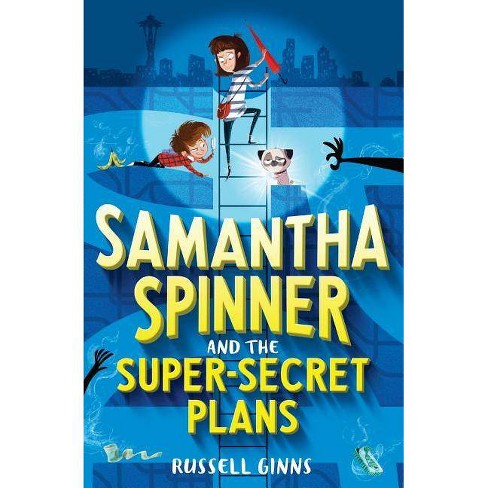
Samantha Spinner and the Super-Secret Plans
Here’s another great book for readers 8-12. The author is Russell Ginns.
For Samantha Spinner it just isn’t fair. Her uncle Paul disappeared, and here’s what he left:
Samantha’s sister Buffy got a check for $2,400,000,000.
Samantha’s brother Nipper got the New York Yankees.
And Samantha got a rusty red umbrella with a tag hanging off its worn handle. The tag says “Watch out for the RAIN.”
Thanks a lot, Uncle Paul.
But really, after all the strawberry waffles, stories, and puzzles they’ve shared, how could Uncle Paul just leave without saying goodbye? And what is the meaning of that mysterious message?
The answer is simple: Sam knows in her heart that Uncle Paul is in danger. And if he taught her anything, it’s that not everything is exactly what it seems. Which is why we should pay close attention to that rusty red umbrella, and never trust a monkey at a hula-hoop contest.
The RAIN is coming, and Samantha Spinner is about to find herself mixed up in some super-important, super-dangerous, super-secret plans.
And if she’s brave enough and smart enough, she just might find Uncle Paul.
-
The Mystics #1 Heroes Reborn
This graphic novel is for kids 8 – 12.
Everyday kids become powerful and stop the spread of evil!
In the ancient times of Gods and heroes, evil attempted to seize the world disguising themselves as six different gods. While they were spreading all their power of destruction, six heroes, each with extraordinary powers and brandishing sacred weapons, rose against these incarnations of evil. The evil was defeated and sealed in a secret place within the red desert on the planet Mars.
Today, enter six young heirs: Yuko of Japan, Parvati of India, Amir of Egypt, Abigail of Germany, Miguel of Mexico, and Neo of Greece suddenly pulled from their everyday lives. About to face the greatest threat that the contemporary world has ever known, in a flash, they get to discover just how worthy successors they may be of the ancient heroes.
Getting to Know the Authors
Philippe Ogaki – Born in the Agen neighborhood of Nouvelle-Aquitane, France in 1977, Philippe has always dreamed of becoming a cartoonist. But not believing his dream was possible, he turned to studies in industrial design, which he later completed with a degree in interior design at Boulle school.
Patricia Lyfoung – Passionate very early about drawing, she did her graduate studies at the Estienne school then at the Gobelins in Paris. She first worked as a storyboard assistant at Marathon Animation on the Totally Spies series and Martin Mystery. She is the author of The Scarlet Rose from Papercutz
Patrick Sobral Patrick Sobral worked as a porcelain decorator for twelve years before devoting himself exclusively to the job of comic book author
You May Also Like

Mecha-Ude: Mechanical Arms (Vol 2)
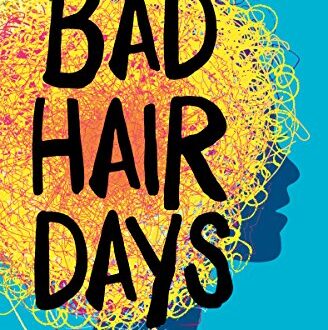
Bad Hair Days: A mystery
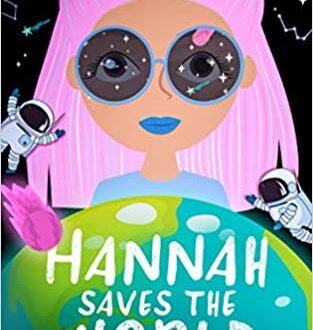
Hannah Saves the World
-
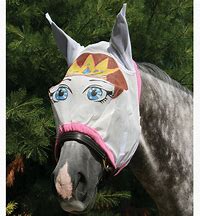
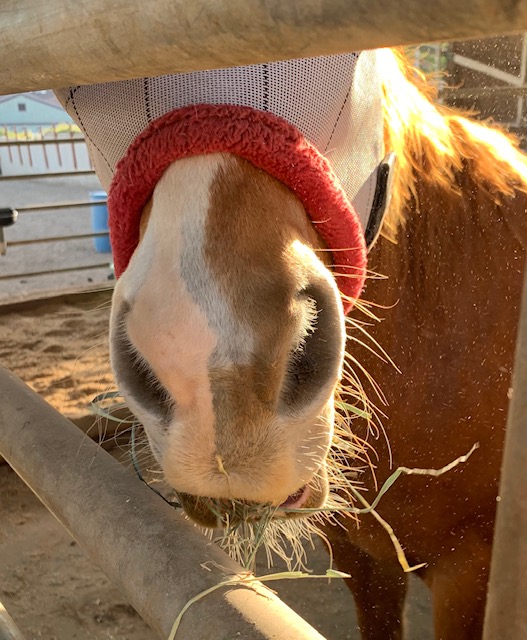
Why are those horses blindfolded?
“I’m worried about the horses in a pasture near me. They’re blindfolded and I’m afraid they’re going to get hurt.”
Every Spring my friend, who works for an animal services department, receives complaints like this!
Do you know what these “blindfolds” really are?
Good job if you know these are actually fly masks, and they don’t impair a horse’s vision. In fact, they protect horses. The masks are made of see-through mesh that protects horses’ face, ears and eyes from flies, insects, and bugs as well as dust and debris in the air and twigs or branches that might otherwise poke them in their eyes.
Fly masks also protect wounds on horses’ heads. Our seven-year old gelding scraped a large spot of hair and skin off his forehead. We doctored his wound and put the fly mask on, protecting him from flies that would otherwise have a party on that wound. Flies are crazy like that.
Have you ever put a fly mask over your own face? I have, and it’s just like looking out your screen door or window screen. Of course my neighbor wanted to know why I was wearing one!
My horses love their fly masks. The minute they see their masks in my hand they lower their heads and stick their noses forward so all I need to do is make sure the opening for their ears is in the right place and then I fasten the Velcro straps.
We always make sure their eyes and faces are clean first, and we make sure to keep their fly masks clean.
Fly masks come in many fun and colorful styles, including coverage for horses’ ears, some have nose fringe, UV protection and longer nose pieces to prevent sunburn. There’s quite a bit more information on the internet about fly masks and their many uses. Just don’t let your neighbor catch you testing one out by wearing it, because take it from me, it might be hard to explain!
-
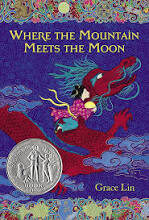
Where the Mountain Meets the Moon
Young Minli lives in the Valley of Fruitless Mountain, where she and her parents spend their days working hard in the fields. At night, Minli listens to her father’s tales about the Old Man of the Moon, who knows the answer to everything.
Minli sets out on a quest to find the Old Man of the Moon – he will know how she can bring good fortune to her family. Along the way, she meets many magical friends including a talking fish, a powerful king, and a dragon who can’t fly.
Written by Newberry Honor award-winning author Grace Lin this timeless story has stunning illustrations that really add to the wonder of this great adventure story. Grace Lin is also the author of the beloved The Year of the Dog and The Year of the Rat.
For all you Science Fiction and Fantasy fans this is a great book for you. And for those of you who think you don’t like Science Fiction or Fantasy, give it a try because Minli is a heroine that you would want to be best friends with. And besides that, who doesn’t love a dragon that can’t fly or fish that can talk?
-
Buried Treasure and Best Friends
I had a best friend growing up named Dee Adams. We had many adventures together including building a fort in her backyard and trying to create a new language of our own.
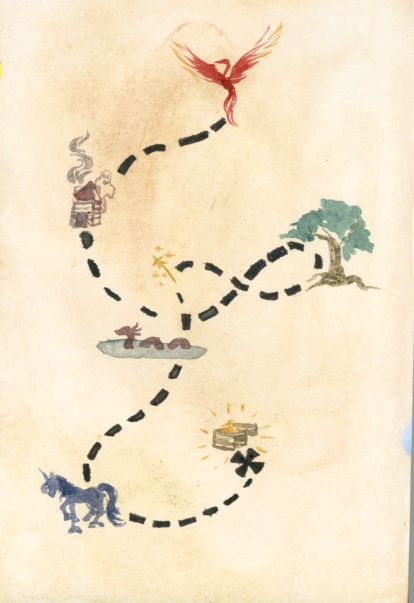
One adventure that I still remember so clearly was borrowing and gathering as many shiny valuables as we could from our moms’ and sisters’ old junk jewelry, decorating a shoe box, and burying it in the far end of my backyard. We made a careful map with a big X to mark where it was buried, then tried as hard as we could to forget about it.
That only lasted a few days. We talked about it nonstop, though for all those days, wondering if someone had found it, whether maybe (we hoped) the fake jewelry had turned into real gold and gems. When we couldn’t wait any longer, on the tenth day we pretended we didn’t know where it was and followed our careful map, counting out steps and carrying Dee’s dad’s shovel.
When we dug the box back up, I was more excited than I thought I would be. We had gathered and made the box and buried it and drew the map ourselves, so there shouldn’t have been any surprise.
But the planning and waiting and re-discovery was so very exciting. It was like re-reading a book I loved. I knew how it would turn out, but the pleasure of going on that journey again was just as delicious.
Maybe you and your best friend or friends could bury your own treasure. Ask your parents for any shiny objects you might borrow. Look in your family junk drawer (I have never been in a house that didn’t have one of these). Gather some coins and small toys and little treasures you have in your room.
Find a small box and decorate it with lots of colors and shapes. If you have some stickers, this would be a great place to use them. Load up your treasure box and secure the top carefully.
Plan with your friends where a good place to bury it might be. If you don’t have a yard, consider a closet that seldom gets used and bury it way in the back under old sleeping bags or shoes.
Don’t forget to make a map. Draw as many details as you can so your return trip to dig up your treasure will last as long as possible. Include important items like the ceramic frog in your garden, or the big rock at the bottom of the hill, or the poster on the wall with a dragon. Count out the number of steps it takes to go from one place to the next. Put a big “X” to mark the spot where you buried your treasure. Wait as long as you can.
Then, pretend you are pirates returning for your booty. Or treasure hunters on an adventure of a lifetime. Or maybe even a writer, looking for clues for your mystery novel.
I hope you find treasure everywhere in your life, especially in books and in best friends.
“There is more treasure in books than in all the pirate’s loot on Treasure Island.” Walt Disney
-
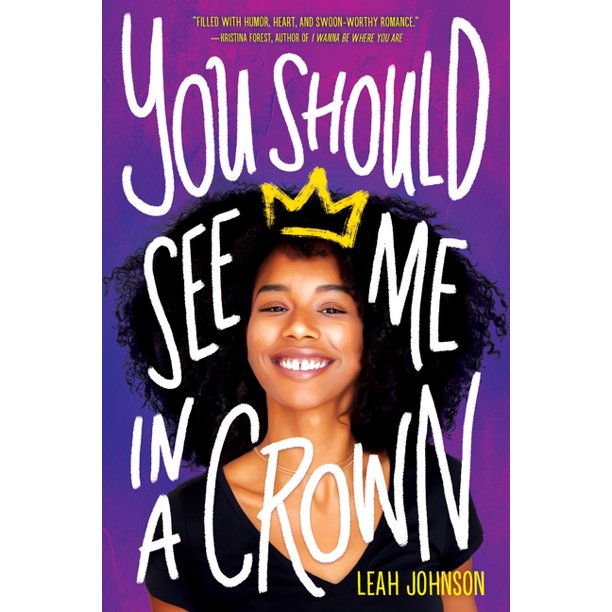
You Should See Me In A Crown
Liz has always believed she’s too black, too poor, and too awkward to shine. She’s planned an escape route from her small town via an uber-elite college, but has no money to get there … until she’s reminded of her school’s scholarship for prom king and queen. Liz fears the spotlight, but must face the gauntlet of social media trolls and catty competitors if she is to win the scholarship.
The only thing that makes it halfway bearable is the new girl in school, Mack. She’s smart, funny, and just as much of an outsider as Liz. But Mack is also in the running for queen.
Will falling for the competition keep Liz from her dreams … or make them come true?
You Should See Me In A Crown by Leah Johnson, is a smart, hilarious, black girl magic rom-com that you’re going to enjoy.
-
Crows, Ravens and Rooks
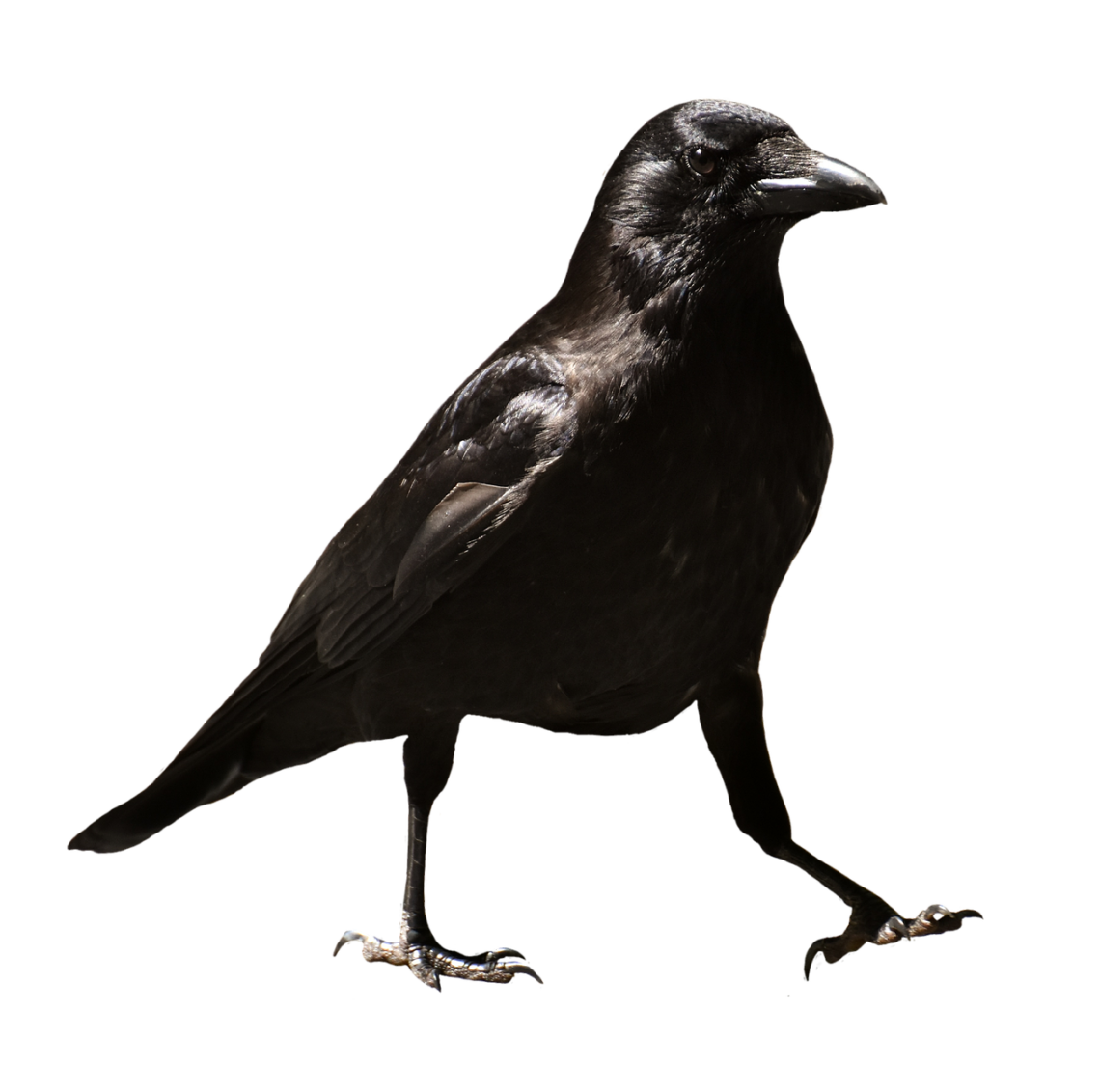
Corvids (not covid—notice the “r) are birds in the crow family. There are over 120 species in this family that includes crows, ravens, rooks, jackdaws, jays, magpies, and others. Corvids are remarkably intelligent and even play games and remember human faces. They have also been known to bring shiny gifts to people in exchange for food. They are found everywhere in the world except for the very bottom of South America and the polar ice caps.
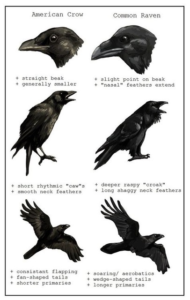
We have many corvids around my house in Southern California, mostly crows and ravens. I find both of them fascinating. But sometimes I wonder which bird I’m looking at. How are crows different from ravens?
To start with, ravens are larger than crows. Their bills are thicker and their legs stronger. They have longer wings and can soar for a long time, unlike crows. Usually ravens hang out with only one other raven and rarely with more than 100. A group of ravens is called a “conspiracy.” Ravens have deep, hoarse caws.
Crows are smaller than ravens. Their bills and necks are shorter than a raven’s. Their wings are shorter and rounder. Crows can sometimes flock together with more than 1,000 individuals. A group of crows is called a “murder,” and this term probably came from superstition or folktales. Their call is higher pitched than a raven’s.
When trying to figure out what kind of shiny, black bird you are looking at, compare and contrast them:
How are they alike? Both are black, smart, widespread, playful, and clever.How are they different? Ravens are larger, less social, bigger-billed, strut and hopping, soaring birds. Crows are smaller, smaller-billed, very social walkers.
Happy birding!
-
Whiskers and Horses
Do horses have whiskers?
Oh yes, around their mouth, nostrils and eyes. Whiskers are sensory organs with their own nerve and blood supply. They provide sensory information that helps protect horses, helps them navigate their world—for instance, in the dark, whiskers help prevent them from bumping into things and injuring themselves—and even helps them while they graze. They are very much like an extra set of eyes, or hands.
For instance, horses use the whiskers on their muzzle (mouth and nose) to tell them how close their lips are to water. You’d think that if the water is right in front of a horse’s nose or eyes she could see it, right? Wrong!
Here’s why. Horses are prey animals. That means that Nature placed their eyes on the sides of their heads, giving them almost a complete view of everything around them—except right in front of their face and nose.
When a horse lowers her nose to investigate something new, people might think she is smelling the object, and if her nostrils are flared, she might be. But she’s also using her whiskers to receive special signals that help her figure out what it is, including information about texture and temperature.
Have you ever tried to look down and see your own lips? That’s pretty hard for most people to do, and that’s what it’s like for horses when they look down their nose. I bet you tried it just now!
-
Why Do We Say That?
Are you an expression-curious person? Curious about words and phrases you might use all the time, but have no idea why we say them or where they come from? I have always loved to investigate wacky etymologies. Etymologies–now there’s a word!
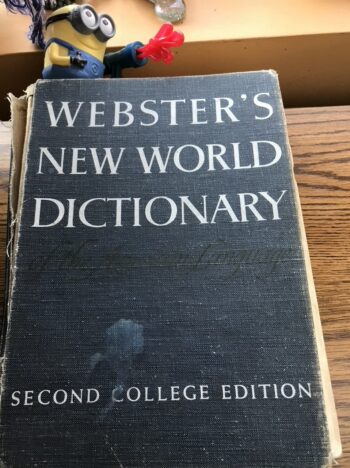
Etymology is the study of the origins of words. Most words that end in -ology mean “the study of.” Etym comes from the Greek word for, well, “word.” I looked this up in a dictionary I have had since I was a freshman in college, Webster’s New World Dictionary. I still use it today.
Here are a few more mysterious words and how we came to write and say them:
When pigs fly means pretty much never, because pigs don’t fly. It is called an adynaton, or a way of saying something that won’t happen. The phrase has been around since the 1600s and is an early form of sarcasm. It was spoken by the Duchess in Lewis Carroll’s Alice’s Adventures in Wonderland.
Keep your eyes peeled means to keep a close lookout. Peeled in this sense means to keep your eyelids wide open. The phrase used to be, “keep your eyes skinned,” but I think it sounded too gross to keep saying.
I call dibs! My old dictionary says that a dib is another word for a dibble, a small pointed tool to make a hole in soil to plant seeds. Children in the 19th century played a game called dibstones using dibbles, and to call “dibs” meant they went first in the game.
Raining cats and dogs is a very old term for heavy rain. It’s not clear how it started, but it might have to do with Norse mythology, ancient superstitions, or clever writers in the 17th century. A famous writer, Jonathan Swift, used it in his satirical writings (satirical means writing that calls attention to silly or pompous people in a funny way).
Hold your horses means you are doing something too fast, so slow down. There are lots of ideas about how this phrase started, all the way from Greek times to the 19th century when men worked on the Erie Canal hauling freight using horses. It was a common phrase when horses were used in all kinds of jobs and making sure they were under control was very important.
Don’t be afraid to look up words that you find intriguing, funny, odd, or nonsensical. It’s a fun game to find out where they came from.
-
Welcome Blog
Once upon a time…our very favorite words of all time and the start to so many adventures.
Once upon a time
…a girl who loved horses had to solve a mystery to save one
…a brother and sister stepped through a magical door into a story and lost their way
…a brave boy helped his alien friend hide from dangerous marauders
…a boy switched places with his math teacher
All stories ask, what if? The answers bring magic and possibilities into our lives. You will never be able to meet every interesting person in your lifetime (and all people are interesting in their own way), so long ago, clever people told stories. As time went on, these stories were written down and passed around.
Now, we are so fortunate to have this incredible tool—books—so we can meet and go on adventures with people all over the world and all over time—even into the future.
We are writers here. We want our stories to light a fire of imagination in your mind and offer a chance to explore the world. Come with us as we find new places and new people. Solve mysteries. Find treasure. Make friends.
Create your own, Once upon a time.