-
Lights, Camera, Action! Stepping onto the Stage: Putting on a Play!
Calling all aspiring actors and theatre enthusiasts! Get ready to embark on an exciting adventure as we delve into the exhilarating world of putting on a play. Here, we’ll discover the magic of the stage, where imagination knows no bounds and dreams come to life. Whether you’ve always dreamed of performing in the spotlight or are curious about the behind-the-scenes magic, we’ll explore the art of creating a theatrical masterpiece from start to finish. Get ready for auditions, rehearsals, costumes, sets, and the excitement of opening night. So, raise the curtain, gather your enthusiasm, and let’s dive into the extraordinary world of bringing a play to life!
No matter what you are performing, expect things to take longer than expected. What may seem like a short script when you read it will take longer than you think to rehearse and perform.
Good casting is absolutely vital, and there are multiple considerations. Lead roles should be played by students who can act the part but can also remember more lines and remember cues. It’s easy to want to cast louder students in the main roles but sometimes a larger-than-life student in the lead role can actually detract from the whole performance.
But putting a larger-than-life student in a character role can have a great result. These students are also fantastic to give lines to before or after chorus lines or ad-libbing. (Ad-libbing is where the actors talk freely but in a rehearsed and directed way) Consider the quieter, more serious mannered and reserved students for lead roles. See them come out of their shells!
Cast for the character and not the actor. Choose a student-actor you know will do well, but be open to surprises.
Give less confident students or students that have trouble remembering lines or cues—funny short lines with an easy cue. They’ll get a strong reaction from the line, so they won’t feel discouraged with a smaller part. We should ensure that all actors have an opportunity to shine by nurturing smaller parts. Engaging the actors in the background is key for a successful performance.
There is such a thing as over-rehearsing. You don’t need to get all the parts perfect before moving onto the next rehearsal stage. It’s important to keep things moving as actors can get bored rehearsing the same part over and over. It is better to come back to some parts and if there is a part that is difficult (blocking or lines or something else) move on and come back to it next rehearsal when the group is fresh. (Blocking is the moves or positions the actors take on a stage.)
Fast delivery is a big issue for all performers. It usually affects the middle of a line, where a line is more than one sentence or a lengthy sentence. Words get lost in the middle because it is too fast. It is important to break sentences up and use pauses and inflection. Remember that the audience has never heard the line or the story before. So it is important that the entire line is very clear. Pauses and inflection are important. A pause means a breath, and that is good to use in order to slow down.
Expect the dress rehearsal to take longer than expected, as actors can get distracted by their costumes. It’s important to do a dress rehearsal to get comfortable with the costumes and fix any costume issues. If actors are bringing costumes from home—always have spare costume parts ready to go.
It can be stressful to put on a play and to feel the pressure of an impending audience! There will always be a line forgotten or something that goes wrong—and these things usually turn out to be very funny. So, just do your best and have fun with it! In the end, it really is all about having fun putting on a performance! The show will go on!
Remember, there is a saying in theatre—bad dress rehearsal, great performance!
AIME
You May Also Like
Shadow Jumper
-
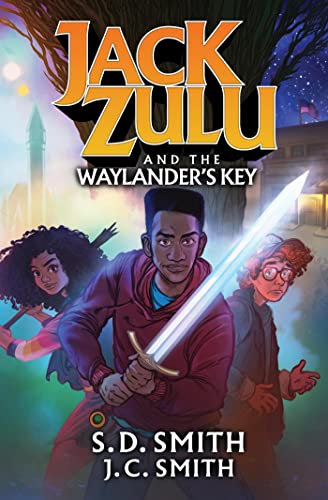
Jack Zulu and the Waylander’s Key
Jack Zulu and the Waylander’s Key is an enchanting adventure in the tradition of Tolkien and Lewis, as well as Spielberg and Lucas. But this fantastical journey launches in rural West Virginia in the eighties, with a half-Appalachian, half-African kid trying to escape the town he sees defining his small, sad life. Jack discovers a gate hiding a city between twelve realms and finds out where he truly belongs in a surprising, satisfying adventure.
From authors S.D. and J.C. Smith for Readers 9-12.
-
Babe Didrikson—Trailblazing Athlete
Hello, young sports aficionados and champions in the making! Today, we dive into the extraordinary life of one of history’s most remarkable athletes, Babe Didrikson. She is widely regarded as one of the greatest athletes of the 20th century.
She shattered barriers, defied expectations, and left an indelible mark on the world of sports. Babe Didrikson was a trailblazer who shattered boundaries and redefined what it means to be a champion. Her legacy is one of undeniable talent, grit, determination, and resilience. So, lace up your sneakers, grab your sports gear, and join us as we delve into the life and accomplishments of this extraordinary athlete. Get ready to be inspired by the indomitable spirit of Babe Didrikson, a true icon in the world of sports!
Babe Didrikson was an American athlete who excelled in multiple sports, especially golf, basketball, baseball, and track and field. She was born on June 26, 1911, in Port Arthur, Texas, to Norwegian immigrants. She changed her surname from Didriksen to Didrikson. Although she claimed to have been born in 1914, various sources indicate the correct year was 1911. From a young age, her goal was to be “the greatest athlete ever to live.” A standout baseball player, she claimed that, as a teenager, she acquired the nickname “Babe” in reference to the famed Yankees baseball player Babe Ruth.
She later dropped out of high school to pursue a career in sports. From 1930 through 1932, she was a member of the women’s All-America basketball team. During the same period, she also won eight events and tied in a ninth in national championship competition in track and field. In the 1932 Women’s Amateur Athletic Association (AAU), competing as a team by herself, Babe won six individual events and the team title, outscoring the 20-women runner-up team from the Illinois Athletic Club 30 points to 22. She became known for her competitiveness and brash confidence.
She also competed in the 1932 Summer Olympics in Los Angeles, where she won two gold medals and one silver medal. She won the gold medals in the 80-metre hurdles and the javelin throw, but was deprived of a third gold medal in the high jump because she had used the unorthodox Western roll to achieve the highest jump. So, she was awarded the silver medal instead. Her Olympic success brought her national attention, not all of which was complimentary. At the time, women were not encouraged to compete in sports, and Babe faced much sexism and claims that she might actually be a man. One sportswriter at that time noted, “It would be much better if she and her ilk stayed at home, got themselves prettied up and waited for the phone to ring.” Such comments failed to deter her, as she also excelled in softball, swimming, figure skating, billiards, and even football.
Babe began playing golf casually in 1932, but from 1934, she played that game exclusively. In 1938, she also became the first woman to compete in a men’s golf event, though she did not make the cut. Also in 1938, she married George Zaharias, a professional wrestler.
Restored to amateur status after some years as a professional, she won the U.S. Women’s Amateur tournament in 1946. The next year she won 17 straight golf championships, including the British Ladies Amateur, of which she was the first American holder. She subsequently became a professional again. She turned to professional golf in 1947 and in 1948 she won the U.S. Women’s Open, a feat she repeated two years later. She went on to become one of the greatest female golfers of all time. She won 10 LPGA (Ladies Professional Golf Association) major championships and 41 LPGA Tour events.
In 1950 she helped found the Ladies Professional Golf Association, and she became the LPGA’s star competitor. She not only attracted interest in the women’s game, but also revolutionized the sport with her powerful drives. Diagnosed with colon cancer, she underwent surgery in 1953. The following year, in one of sport’s greatest comebacks, she captured her third U.S. Open. Although she wore a colostomy bag, Babe dominated the event, winning by 12 strokes. She won four other tournaments in 1954, and the following year she claimed two more victories, which were the last of her career.
Her autobiography, This Life I’ve Led, appeared in 1955. She died on September 27, 1956, in Galveston, Texas, from colon cancer. In 2021, she was posthumously awarded the Presidential Medal of Freedom.
AIME
You May Also Like

Shadow Jumper
-
Crenshaw
Jackson and his family have fallen on hard times. There’s no more money for rent. And not much for food, either. His parents, his little sister, and their dog may have to live in their minivan. Again.
Crenshaw is a cat. He’s large, he’s outspoken, and he’s imaginary. He has come back into Jackson’s life to help him. But is an imaginary friend enough to save this family from losing everything?
This is an unforgettable and magical story about family, friendship, and resilience from author Katherine Applegate for Readers 8-10.
-
Halloween Cupcakes—Unleash Your Inner Pastry Chef!
Hey there, budding bakers! Are you ready to embark on a delightful and delicious adventure in the world of cupcakes? Whether you’re a kitchen novice or an aspiring pastry chef, today is your ticket to cupcake-making mastery. Get ready to roll up your sleeves, don your aprons, and dive into the sweet art of cupcake creation. From choosing the perfect flavors and mixing up the batter to decorating with flair, we’ll guide you through the step-by-step process of crafting delectable treats that will impress friends and family alike. So, grab your measuring cups, gather your ingredients, and let’s whisk our way to perfect Halloween cupcakes!
To begin with—let’s start with making the perfect vanilla cupcakes. It takes 7 minutes to gather and mix the ingredients and 18 minutes to bake them at 350⁰ oven. Let them cool for 10-15 minutes before you frost them.
Ingredients
- 2 large eggs (room temperature)
- 1 cup granulated sugar
- 1 stick butter (1/2 cup), room temperature
- 1 teaspoon vanilla extract
- 1 1/2 cups all-purpose flour
- 1 1/2 teaspoons baking powder
- pinch of salt
- 1/2 cup milk
- 2 drops yellow food coloring
- 1 drop red food coloring
Mix the sugar and butter together till they form a buttery spread.
Mix the dry ingredients together in a large bowl.
Add the sugar and butter mixture and stir together.
Add the vanilla extract and the food coloring to the ½ cup of milk and add it to the dry mixture.
Stir the liquid mixture into the creamed, dry mixture and stir the batter until well mixed.
Place empty cupcake liners into the cupcake tray and fill ½ to ¾ with the batter.
Bake 18 minutes until a toothpick inserted into the middle of the cupcake comes out clean.
Cool at least 10-15 minutes before frosting.
For the Frosting
- 3 cups powdered sugar
- 1/3 cup softened butter (not melted)
- 2 teaspoons vanilla extract (or coconut)
- 1 to 2 tablespoons milk
- 3 drops yellow food coloring
- 1-2 drops red food coloring
Mix the ingredients in a medium size bowl and spread on top of your cooled Halloween cupcakes.
Top each cupcake with a store-bought plastic spider ring.
Serve to your friends. And enjoy!
AIME
You May Also Like
Shadow Jumper
-
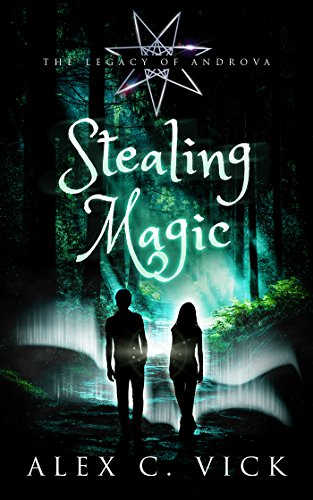
Stealing Magic (The Legacy of Androva Book 1)
Jax is a fourteen-year-old magic-taker from Androva. He’s also a rule breaker. He should not have opened a portal to our world in daylight, no matter how fed up he was with the rules, or how interested he was in Shannon.
Shannon considers herself to be ordinary. She loves escaping into fantasy books, but she never actually believed in magic. Not until the day she opens her eyes to find herself surrounded by it. And that boy, the one with the green eyes, who winks at her before he disappears into thin air. Who is he? Where does he come from?
When Shannon first touches the silver force field created by Jax, a treaty is broken, giving an ancient enemy the chance he needs to regain his power. The two teenagers don’t have much time to figure out what is going on, and they’re going to need all of their combined magical ability to stand a chance of surviving.
The next ten days will be the most exciting and terrifying of their lives (so far!).
From author Alex C. Vick for Readers 10-14.
-
The Golden Spice of Health and Flavor!
Hey there, curious taste buds! Prepare for a flavorful journey as we learn about the benefits of turmeric—a vibrant spice with rumored amazing health benefits.
A relative of ginger, this vivid yellow-orange spice is common in Indian, Southeast Asian, and Middle Eastern cooking. Its rhizomes (mass of roots) are used in cooking. Also, for dyeing the robes of Buddhists monks.
Rhizomes are boiled and dried, then ground into a yellow powder used to color and flavor Asian dishes, particularly curries. Turmeric powder has a warm, bitter, black pepper-like flavor and earthy, mustard-like aroma.
Turmeric is one of the key ingredients in many Asian dishes. Many products, such as canned beverages, baked goods, dairy products, and sauces, use it to add a yellow, golden, or brown color. It is a principal ingredient in curry powders. Although typically used in its dried, powdered form, turmeric also is used fresh, like ginger. It has many uses in East Asian recipes.
Find out what turmeric can—and can’t—do for your health.
It has also been used as a medicine in places like India for centuries for various illnesses. Lately, many have been claiming that turmeric is a super food that can fight cancer, ease depression, and more. So far, testing has not backed up many health claims, apart from its anti-microbial properties.
Scientific testing has shown turmeric has potent anti-microbial properties. Many studies have shown turmeric and curcumin as promising anti-bacterial, anti-fungal, and anti-viral agents. They have proven their ability to curb the spread of microorganisms that cause illnesses and deadly diseases.
Turmeric is effective against various microbes. Thus, turmeric could assist in the prevention and treatment of several microbial infections.
Does turmeric have any proven health benefits?
Turmeric is a favorite spice around the globe that many believe contains a wide array of health benefits—from its antioxidant contents to its ability to soothe and prevent inflammation.
What is in turmeric that makes it beneficial?
Many believe that curcumin, the active compound in turmeric, has numerous health benefits, such as protecting against heart disease, Alzheimer’s, and cancer. They also believe that it is a potent anti-inflammatory and antioxidant. And that it may also help improve symptoms of depression and arthritis.
Is it safe to take turmeric every day?
Taking turmeric in low amounts (the levels added in food) generally does not pose any health problems. According to the World Health Organization (WHO), it is safe to consume 1.4 mg of turmeric per pound of body weight each day. Higher doses of turmeric, however, when consumed for longer periods, may harm the body.
What are the side effects of turmeric?
Turmeric typically has few problem side effects, but it can lead to stomach problems, nausea, dizziness, or diarrhea in some cases.
The next time you’re under the weather, you may want to sip some turmeric tea. Curcumin might help you to fight off a variety of viruses, including herpes and the flu. But most of the research on this was done in a lab, not on people.
Keep in mind that turmeric is only about 3% curcumin, and your body doesn’t absorb curcumin well. So, the occasional cup of tea won’t be a cure-all. But it can’t hurt.
AIME
You May Also Like
Shadow Jumper
-
Race to the Sun
Lately, seventh grader Nizhoni Begay has been able to detect monsters, like that man in the fancy suit who was in the bleachers at her basketball game.
Turns out he’s Mr. Charles, her dad’s new boss at the oil and gas company, and he’s alarmingly interested in Nizhoni and her brother, Mac, their Navajo heritage, and the legend of the Hero Twins. Nizhoni knows he’s a threat, but her father won’t believe her. When Dad disappears the next day, leaving behind a message that says “Run!”, the siblings and Nizhoni’s best friend, Davery, are thrust into a rescue mission that can only be accomplished with the help of Diné Holy People, all disguised as quirky characters.
Their aid will come at a price: the kids must pass a series of trials in which it seems like nature itself is out to kill them. If Nizhoni, Mac, and Davery can reach the House of the Sun, they will be outfitted with what they need to defeat the ancient monsters Mr. Charles has unleashed.
But it will take more than weapons for Nizhoni to become the hero she was destined to be.
From author Rebecca Roanhorse for Readers 8-12.
-
The Thrilling World of Birdwatching!
Greetings, young nature enthusiasts! Are you ready to embark on an awe-inspiring journey into the enchanting realm of birdwatching? Grab your binoculars and prepare to witness the vibrant feathers, graceful flights, and melodious songs of our feathered friends up close. Today, we’ll discover how this captivating hobby can unveil a whole new dimension of the natural world. From identifying different bird species and learning their unique behaviors to exploring their habitats and becoming stewards of the environment. Birdwatching will ignite your curiosity and nurture a deep appreciation for the amazing avian creatures that grace our skies. So, dust off your field guides, sharpen your observation skills, and let’s embark on a journey of discovery together. Let’s explore where every chirp and flutter bring a new moment of wonder!
To begin with birds can be seen almost anywhere, and you don’t need binoculars or a telescope. Secondly, millions go bird watching every year. So, to make the experience as pleasant as possible birdwatchers developed the Birdwatcher’s Code. It puts the interests of birds first and respects other people, whether or not they are interested in birds.
The Code consists of 4 rules:
- Avoid disturbing birds and their habitats – the birds’ interests should always come first.
- Be an ambassador for birdwatching.
- Be respectful of the bird’s habitat and people’s property that the birds are on. Respect the wishes of the local residents and landowners, and don’t enter private property without permission.
- Think about the interests of wildlife and local people before passing on news of a rare bird, especially during the breeding season.
You don’t need much to enjoy birds—just your eyes and ears. Plus, you don’t need to know anything about birds to enjoy watching them. But if you are really interested in learning about the birds that you are watching. It helps if you have a bird guidebook that will help you identify the different birds you see in nature.
Birds respond to people in many ways, depending on the species, location, and time of year.
Disturbance can keep birds from their nests, leaving chicks hungry or enabling predators to take eggs or young.
During cold weather or when migrants have just made a long flight, repeatedly flushing birds can mean they use up vital energy that they need for feeding.
Whether your particular interest is photography, sound-recording, or birdwatching, remember that the interests of the birds must always come first.
- Avoid going too close to birds or disturbing their habitats – if a bird flies away or makes repeated alarm calls, you’re too close. And if it leaves, you won’t get a good view.
- Stay on roads and paths where they exist and avoid disturbing the habitats used by birds.
- Think about your fieldcraft. Disturbance is not just about going too close – a flock of wading birds on the foreshore can be disturbed from a mile away if you stand on the seawall.
- Repeatedly playing a recording of birdsong or calls to encourage a bird to respond can divert a territorial bird from other important duties, such as feeding or protecting its young. Never use playback to attract a species during its breeding season.
Whether you’re watching small birds in your backyard, or birds of prey soaring hundreds of feet above your head, birds are everywhere. The most important thing to remember is to enjoy watching and listening.
Just remember, contrary to popular belief, you don’t need expensive equipment or expert knowledge. The most important ‘tools’ are your eyes, ears, and brain! All the other things are optional.
AIME
You May Also Like
Shadow Jumper
-
I Shrunk My Best Friend! – Book 1 – Ooops!
Bella and her best friend, Joe are two very smart kids who spend every spare minute together. One day, they devise a plan, a plan that is going to make them super rich and super famous. It is such a great plan that they’ll be able to skip school and even have their own TV show! What could be better than that?
However, this particular plan does not go ahead the way Bella and Joe had hoped, and they quickly find themselves faced with a huge problem; one that they are unable to solve on their own. Then when Bella’s secret crush at school becomes involved, things begin to get very interesting.
From start to finish, this is a very funny book that will keep you laughing as well as trying to guess what is going to happen next.
From author Katrina Kahler and John Zakour for Readers 8-12.