-
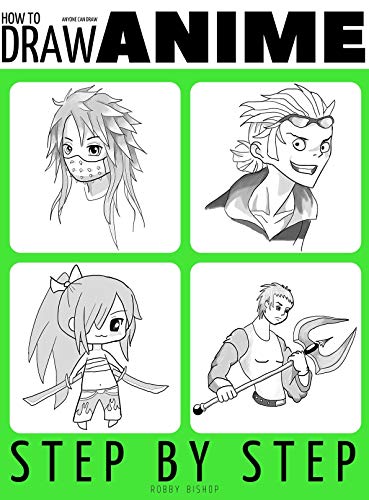
Anyone Can Draw Anime: Easy Step-by-Step Drawing Tutorial for Kids, Teens, and Beginners.
This is a great how to draw book for kids!
In this beginner’s drawing book, every mini drawing lesson is broken down into easy-to-follow step by step instructions.
This How to Draw Anime: Step by Step beginners drawing for kids is the only sketch book you’ll need to turn your creativity into artistic confidence, by learning how to draw cool stuff!
From author Robby Bishop for Readers 8-18.
-
Volcanoes—Nature’s Fireworks
Hey there, curious minds! Let’s embark on an exciting journey to discover the amazing world of volcanoes. Strap on your adventure boots and get ready to be amazed! Volcanoes are majestic mountains with a fiery secret. Deep beneath the Earth’s surface, molten rock called magma builds up over time. When the pressure becomes too intense, the magma bursts out, creating a volcanic eruption. It’s like a natural firework show!
What is a volcano?
A volcano is an opening in a planet or moon’s crust through which molten rock, volcanic ash, and gases trapped under the surface erupt, often forming a hill or mountain.
Volcanic eruptions are partly driven by pressure from dissolved gases. Beneath a volcano, liquid magma containing dissolved gases rises through cracks in the Earth’s crust. As the magma rises, pressure decreases, allowing the gases to form bubbles. How the magma (lava) behaves when it reaches the surface depends on both its gas content and chemical composition. Lavas with low silica contents have low viscosities and flow freely, allowing any gas bubbles to escape readily. While lavas with high silica contents are more viscous (resistant to flow), so that any trapped gases escape gradually.
What is silica? Think of beach sand.
Silica, also called silicon dioxide, is a compound of the two most abundant elements in Earth’s crust, silicon and oxygen. The mass of Earth’s crust is 59 percent silica, the principal component of over 95 percent of the known rocks. Silica has three main crystalline varieties, with quartz being, by far, the most abundant variety. Silica sand is used in buildings and roads in the form of portland cement, concrete, and mortar. It also forms sandstone. Silica also is used in grinding and polishing glass and stone; and in the manufacture of glass and ceramics.
Volcanic eruptions are violent and can create colorful and dramatic displays. Volcanoes often form a hill or mountain as layers of rock and ash build up from repeated eruptions.
Volcanoes are classified as active, dormant, or extinct. Active volcanoes have a recent history of eruptions—like Hawaii’s volcanoes; they are likely to erupt again. Dormant volcanoes—like the Cascade Mountains in Washington state—have not erupted for a very long time, but may erupt at a future time. Extinct volcanoes are not expected to erupt in the future.
Inside an active volcano is a chamber in which molten rock, called magma, collects. Pressure builds up inside the magma chamber, causing the magma to move through channels in the rock and escape onto the planet’s surface. Once it flows onto the surface, the magma is known as lava.
Some volcanic eruptions are explosive, while others occur as a slow lava flow. Eruptions can occur through a main opening at the top of the volcano or through vents that form on the sides. The rate and intensity of eruptions, as well as the composition of the magma, determine the shape of the volcano.
Volcanoes are found on both land and the ocean floor. When volcanoes erupt on the ocean floor, they often create underwater mountains and mountain ranges as the released lava cools and hardens. Volcanoes on the ocean floor become islands when the mountains become so large they rise above the surface of the ocean. Like the Hawaiian Islands.
Hawaii’s Kilauea (pronounced kil-a-way-ah) volcano, one of the most active on Earth, has been erupting continuously, beginning Jan. 3, 1983. Kilauea erupted 200 years ago, sending speeding lava flows down its peaks and killing over 400 people, including Hawaiian warriors. It was the deadliest volcanic eruption on record in what is now the United States.
Kilauea means “spewing” or “much spreading” in Hawaiian. Which is a perfect name for one of Hawaii’s most awe-inspiring volcanoes.
AIME
You May Also Like

Shadow Jumper
-
Disaster Diaries: Aliens!
So, Aliens have invaded your planet? Bummer.
You could pretend you can’t see them and hope they go away.
Or wear camouflage, pretend they can’t see you and hope they go away!Sam, Arty and Emmie have just barely survived a recent zombie infestation when their sleepy little town of Sitting Duck finds itself the victim of an alien invasion!
But unlike what you often see on television, the aliens are very small and very cute. How dangerous can they be?
SPOILER ALERT: they’re very dangerous. And when they disintegrate the mayor with their ray guns, it’s a complete disaster. It’s up to Sam, Arty and Emmie to save the day! Again. Let the total domination of the planet begin!
This series from author R. McGeddon is a must for young readers who plan on surviving the highly probable alien invasion that should be happening somewhat soon-ish. Disaster Diaries: Aliens! offers helpful tips to survive this encounter. (Hint: Pretend you can’t see the alien and hope it goes away). In fact, your very life may depend on experiencing the laugh-out-loud hijinks and catastrophic escapades that can only be found in the town of Sitting Duck.
For readers 8-12.
-
Unlocking the Power of Words—Keeping a Journal
Today we are diving into the world of journaling, where the blank pages become a canvas for your thoughts, dreams, hopes, fears, and experiences. Keeping a journal isn’t just about writing. It’s a magical portal that allows you to explore your innermost thoughts, express your emotions, and capture the important moments of your life. So, grab your favorite pen, find a cozy nook, and join us as we unveil the joys of journaling and how it can become your trusted companion in this exciting journey of self-discovery and personal growth. Let’s unlock the power of words and embrace the joy of keeping a journal!
First, what is a journal?
A journal is just a notebook or writing pad where you write about your inner thoughts, hopes, fears, concerns, worries, and excitement.
Journaling, quite simply, is a written record of your thoughts, feelings, or observations about the world. It can include short sentences, long paragraphs, or even single words. In a nutshell, a journal is whatever you want it to be.
The prospect of beginning a new journal for the first time can seem overwhelming. Luckily, the first rule of journal writing is that there’s no wrong way to do it. You can free write, jot down bullet points, or make a to-do list. It’s important to start and keep writing, whatever your style.
When things are going on in your life—write it down: Keeping a journal can be a productive way to cope with what is going on in your life.
Journaling helps you sleep, helps you understand yourself better, and helps you face what is going on in your life.
Writing all your anxious thoughts in your journal will really help you process those thoughts and help you prepare for the next day.
Journaling can help you figure out how to deal with conflict at school or home. And it helps you perform better on tests because you are not distracted by thinking or worrying about other things.
Keeping a journal allows you to understand your thoughts, become a better writer, and build better writing habits.
Here are five reasons you should keep a journal:
- Your journal has the potential to be a trusted friend who listens without judging or interrupting and is open 24 hours a day. You can tell your journal things you wouldn’t dare say to someone else. Writing it down lessens the impact of negative emotions and helps you figure out what your next steps should be.
- Reviewing your journals can help you reach your goals and respond to challenges. You’re also able to see the patterns that get in the way of personal growth, and healthy relationships with yourself and others. By becoming mindful of what you are discovering, you can move yourself from knowing into a doing state.
- 3. Journaling is easy and fun.
- Journals are creative portals. Because you’re in dialogue with your inner life when you write in a journal, you solve problems and get creative. Keeping a journal allows you to unleash your creativity and ideas.
- You give yourself permission to be your true self. Journals give voice to your dreams and aspirations but are also safe spaces to release negative feelings, hurts and disappointments that could get in the way of those dreams and aspirations being realized.
So, grab a pen or pencil and some paper—and start journaling!
AIME
You May Also Like
Shadow Jumper
-
Unlegendary Dragon: The Magical Kids of Lore
Percy Jackson meets Wings of Fire in this hilarious, action-packed new series about a misfit kid who is destined to protect the world as a mighty, legendary dragon!
12-year-old Connor Pendridge is moving… again. This time, his mom thinks their lives will be better in Lore, a sleepy island town off the coast of New England. Connor doesn’t want to start over at yet another new school, especially in a place as boring as Lore. But as he quickly learns, Lore isn’t as boring as it seems.
That’s because fantastic creatures appear that only he can see—from fairies at school to goblins in his front yard. Connor thinks he’s going crazy until a mysterious woman reveals his true destiny and hands him a dragon amulet containing the magic of Excalibur, the legendary sword of King Arthur. Now Connor must use the amulet to transform into a mighty dragon in order to stop an ancient, evil sorceress from conquering the world! Connor doesn’t know the first thing about being a dragon. Luckily, he has the help of Merlin, his magical mentor, and his new friends, Gabby, who has a unicorn amulet, and Wade, who has a griffin amulet. Will Connor take flight as the legendary dragon of his destiny—or will he flame out as the most unlegendary dragon of all time?
From author R.L. Ullman for Readers 8-12.
-
Tortilla Time—A Tasty Treat
Hola, young culinary artists and aspiring chefs! Today, we invite you to join us on a mouthwatering journey as we learn the age-old craft of making tortillas from scratch. We will roll up our sleeves, dust our hands with flour, and unlock the secrets to creating these delectable, versatile flatbreads that have been a staple in many cuisines for centuries.
Making tortillas isn’t just about mixing ingredients; it’s a delightful process that combines tradition, skill, and a pinch of love. So, grab your aprons, gather your ingredients, and let’s dive into the delightful world of tortillas.
Get ready to knead, press, and savor the satisfaction of creating homemade tortillas that will elevate your meals to new heights. Let’s embark on a culinary adventure as we learn the art of making tortillas together, one delicious batch at a time.
Tortillas (pronounced tor-tea-yas, tor-tea-ya sing.) are easy to make and they taste good. You can cook them in a dry skillet, bake them in the oven at 350⁰, or on an open flame. Whichever way you cook them, for safety reasons always make sure you have an adult, or other grown up, in the kitchen with you during the cooking stage.
When you are done, you want your tortilla to be soft and tender, with just a little bit of “chew.” You can make and serve them in under one hour. And the more you practice making them, the faster you will become getting them onto your plate and into your stomach.
If you want, you can make the dough the day before and allow it to rest in the fridge overnight. Just make sure you take it out of the refrigerator the next day to warm up some. The dough is easier to flatten when it isn’t ice cold.
You make tortillas with five simple ingredients: flour, baking powder, salt, a fat (butter, lard, shortening, or vegetable oil), and hot water. Usually you just use unbleached, all-purpose flour. However, you can use half a mixture of white whole wheat flour and all-purpose white flour; or all gluten-free flour if you prefer. If you are a vegan, you will want to use the vegetable oil for your fat.
It only takes about fifteen minutes to prepare the dough and a few minutes to cook the flattened patties in the skillet. If you decide to bake them in the oven, then bake them for twenty to twenty-five minutes.
To make 8 tortillas, you need:
2 ½ cups of unbleached all-purpose flour
1 teaspoon baking powder
½ teaspoon salt
¼ cup of fat (lard, shortening, or butter) [Note: if using oil, add the ¼ cup of oil to the hot water]
¾ cup of hot water (110⁰ – 120⁰)—add more water if needed
- Add the dry ingredients together and crumble the fat into the dry mixture.
- Add the liquid (hot water; or hot water and vegetable oil.)
- Use a fork, mixer with a dough hook, or a dough whisk to bring the dough together into a shaggy mass.
- Add additional water by the tablespoon until there are no dry powdery bits in the bottom of the bowl. The dough should hold together when squeezed.
- Knead gently. (Roll it gently into a ball until it looks smooth.)
- Let the dough rest for ½ hour.
- Divide into 8 balls and flatten with your hand or a tortilla press.
- Cook until done.
And there you have it! Eight delicious and tasty tortillas to enjoy!
AIME
You May Also Like
Shadow Jumper
-
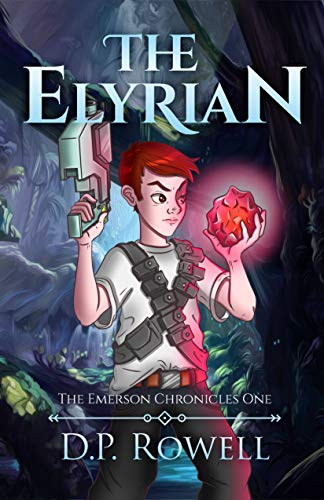
The Elyrian
Like everyone else, Ace believed witches were nothing more than a bedtime story myth . . .
On a family vacation in a strange new land, Grandpa pulls Ace aside and tells him a startling truth. Not only are witches real, but they’re also taking over the world, and Ace is the only one who can stop them.
Ace is the chosen keeper of a mythical gem housing an incredible, ancient power that makes the darkness tremble—unfortunately, that also makes him and his family the witches’ biggest target.
Then, after passing the gem down to him, Grandpa mysteriously disappears, leaving Ace to fend for himself.
To learn this new power, Ace must now escape the witches chasing him and his family, venture through treacherous lands filled with strange creatures to the headquarters of his grandfather’s underground rebellion, and somehow convince a group of elite warriors that he—a twelve-year-old boy and his grandfather’s youngest descendant—must assume leadership.
Can twelve-year-old Ace save the world and protect this family?
From author D.P. Rowell for Readers 9-12.
-
The International Space Station—ISS
Welcome to space all you space explorers! The International Space Station (ISS), is a remarkable laboratory floating 250 miles above our planet. The ISS is an amazing feat of exploration where astronauts collaborate and conduct experiments. Let’s buckle up and explore the International Space Station!
Five space agencies from 15 countries run the International Space Station. The ISS has been continuously occupied since November 2000. An international crew of seven people live and work while traveling at a speed of five miles per second, orbiting Earth about every 90 minutes. Sometimes more are aboard the station during a crew handover. In 24 hours, the space station makes 16 orbits of Earth, traveling through 16 sunrises and sunsets. The acre of solar panels that power the station means sometimes you can look up in the sky at night and see the spaceship flying over your home, even if you live in a big city.
The living and working space in the station is larger than a six-bedroom house (and has six sleeping quarters, two bathrooms, a gym, and a 360-degree view bay window). Since there are six bedrooms, but seven crew members, that means that at least one crew member is awake and on duty while the others sleep. To mitigate the loss of muscle and bone mass in the human body in microgravity, the astronauts work out at least two hours a day.
Astronauts and cosmonauts regularly conduct spacewalks for space station construction, maintenance, and upgrades. The solar array wingspan (356 feet, 109 meters) is longer than the world’s largest passenger aircraft, the Airbus A380 (262 feet, 80 meters).
The large modules and other pieces of the station were delivered on 42 assembly flights, 37 on the U.S. space shuttles and five on Russian Proton/Soyuz rockets.
The space station is 356 feet (109 meters) end-to-end, one yard shy of the full length of an American football field, including the end zones. Eight miles of wire connects the electrical power system aboard the space station. On-orbit software monitors approximately 350,000 sensors, ensuring station and crew health and safety.
Eight spaceships can be connected to the space station at once. While it can host over 20 different research payloads outside the station at the same time. Plus, a spacecraft can arrive at the space station as soon as four hours after launching from Earth.
Four different cargo spacecraft deliver science, cargo, and supplies: Northrop Grumman’s Cygnus, SpaceX’s Dragon, JAXA’s HTV, and the Russian Progress. The microgravity laboratory has hosted nearly 3,000 research investigations from researchers in over 108 countries. The station’s orbital path takes it over 90 percent of the Earth’s population, with astronauts taking millions of images of the planet below. The space station travels an equivalent distance to the Moon and back in about a day.
Interestingly, the Station is scheduled to orbit Earth till 2024, though some of the NASA officials confirmed that orbit will be extended till 2028. Then it will be intentionally deorbited over a stretch of ocean and most of the components will be burned up in the Earth’s atmosphere.
Some fun facts about the station begin with the fact that there is a gun placed in the International Space Station that belongs to the Russians. The purpose of the gun is to protect themselves against the bears in case the capsule lands off-target on reentry into the earth. Another fun fact is Pizza Hut made a delivery to the International Space Station in 2001. They paid the Russians $1 million to transport the Pizza. They made a commercial from it.
Another interesting fact about the Station is that it has a small memory device that contains the DNA of British physicist Stephen Hawking, late night TV host Stephen Colbert, and Playboy model Jo Garcia. It is known as the Immortality Drive. Plus, American astronauts can vote in elections from orbit by secure email. And some of the shooting stars in the atmosphere that you can see are actually astronauts poop burning up in the atmosphere.
NASA has a service where you can register your mobile number and they will text you the exact location of the International Space Station. Now wouldn’t that be a fun thing to show all of your friends if you have your own cell phone.
AIME
You May Also Like
Shadow Jumper
-
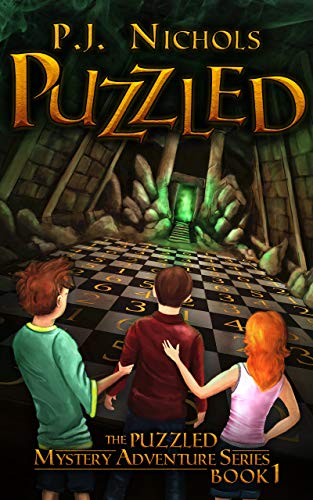
Puzzled
Peter, an exceptionally clever junior high school kid, is pulled into an adventure where he and a few friends have to solve a series of very challenging riddles and puzzles in order to prevent a deadly disaster. Peter’s mind, which has an amazing talent for problem-solving, is needed to save the world.
This adventure sure is a big change from what Peter typically deals with in life: He gets called geek and nerd by everyone in the cool group. He tries to hide his love for learning, in a hope to stick out a little less. He fantasizes about a girl who is out of his league.
Peter and his friends must solve every confusing riddle and challenging puzzle they face. If they can’t, a powerful supernatural being will cause immense destruction and devastation.
From author P.J. Nichols for Readers 9-15.
-
Pandas
What looks like a bear and acts like a bear, but isn’t a bear?
You guessed it—it is a panda. With their cute black eye patches and white faces, cuddly looking pandas are a fan favorite among zoo-goers and intrepid visitors to the China’s panda sanctuaries. For a long time, animal scientists could not decide on whether pandas were related to bears, or even possibly raccoons. But recent advances in science helped scientists realize pandas belong to an animal family all their own. It is known as Ailuridae. While bears belong to the Ursidae family and raccoons are from the Procyonidae family.
90-98% of a panda’s diet is bamboo. Unfortunately, in China, many of the bamboo forest were cut down to make room for humans to grow crops for food. As a result, the panda population almost disappeared. Scientists estimated that there were only about 1,000 pandas in all of China and they were in danger of extinction. But thankfully because they are so cute, people around the world united to help save them from extinction. Today, there are now over 1900 pandas in the wild. With a few more in select zoos around the world. They are on loan to the zoos—for a price. The money the zoos are charged goes to funding the panda sanctuaries in China and the research needed to protect them and help their population grow.
Pandas reproduce slowly and not very often. A baby panda lives with its mother until it is eighteen months old before it leaves home and goes out on its own. Then the mother is only fertile for 2-3 days in the entire year. Since pandas are solitary creatures, a female panda may not get pregnant again for many years. When they get pregnant, they may have twins. Unfortunately, many times, one twin is overlooked and dies.
To save the pandas, and increase their population, scientists came up with the idea to use the world’s zoos with their highly trained veterinarian staffs, to help the pandas with their slow reproduction problems. That is why China loans out their rare pandas to select zoos around the world. Thanks to that program, many new pandas have been born and returned to the panda sanctuaries in China.
Pandas were so rare that no European had observed a live one in the wild until Walter Stötzner’s expedition of 1913-15. The only other reported sighting before then was from a Catholic missionary named Armand David, who saw some panda furs in 1869.
China now has over 40 panda sanctuaries in the remote mountain regions of the Sichuan, Shaanxi, and Gansu provinces. The sanctuaries protect the animals against poachers and help them breed so that their population will grow.
A baby panda only weighs about 4 ounces when it is born—that’s less than a candy bar. And it is only about as long as a pencil at birth. Its eyes are closed for the first 45 days after it is born, and it is virtually helpless. It depends entirely on its mother for warmth, nourishment, positioning at the breast, and stimulating the passage of wastes.
And speaking of poop—bamboo is not very nutritious. So, a panda has to eat a lot of it in order to stay alive. A panda eats 16-19 hours a day, and that is a lot of bamboo for the panda to digest. So, it has to poop over 50 times a day to make room for all the bamboo it has to eat.
When they aren’t foraging for food to eat. Pandas like to play. That’s why pandas like living in the zoos. There they don’t have to spend all their days searching for bamboo to eat. Instead, they get to spend their time playing and entertaining visitors. And they live longer, too. Captive pandas may live beyond 30 years in captivity, but their life span in the wild is estimated at about 20 years.
Although they are cute and cuddly looking, male pandas can grow to be six feet tall and weigh over two hundred pounds. Females are usually smaller. Although they are usually slow moving and clumsy, Pandas do climb high in a tree to reach the bamboo they need to eat.
Unlike most other bears, pandas do not hibernate. When winter approaches, they head lower down their mountain homes to warmer temperatures, where they continue to chomp away on bamboo! And thanks to conservation efforts panda bear numbers are increasing in the wild. Though there’s still lots of work to be done, the species is no longer considered endangered. Hooray!
AIME
You May Also Like
Shadow Jumper